

The Last Layer
What we see in a finished piece is only part of the story. Four Maine painters, fifteen years of conversations, and the unseen work behind any finished thing.

Last week, our granddaughter visited a lighthouse, with no idea what it might one day come to mean to her. Many painters begin a canvas the same way.
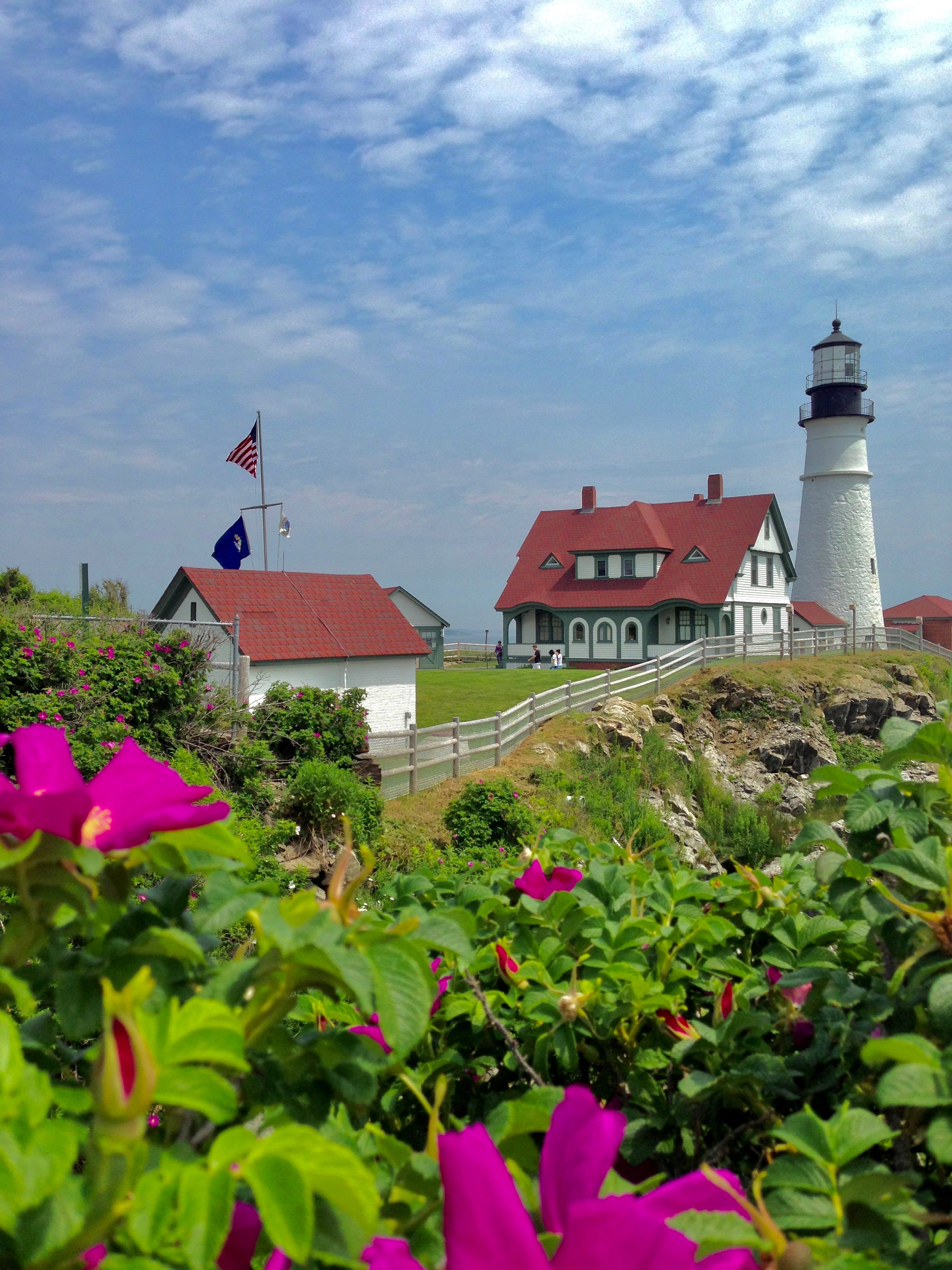
Finding Fort Williams
Today began in mist, with few birds sharing their songs from the trees. On our porch, the crimson geraniums glowed through the gray, carrying the palette from the beach roses lining our neighbor’s patio. The spicy scent of yarrow hung over the embankment.
By mid-morning, the sun shone through, and the song sparrows responded joyfully to the light.
This week on Littlejohn Island, we moved fully into summer. A neighbor asked whether he could set a sign on our lawn, a prominent corner of the island, to let people know he has lobsters for sale now that he is out of school. Most mornings, the dock already had people on it as I ran by, sometimes loading lobster traps on their boats, sometimes casting a line into the water before heading to work.
We took advantage of the warmer weather to bring our granddaughter to Fort Williams in Cape Elizabeth, home to Maine’s oldest lighthouse. It's a place my family knows well. My grandparents met at the fort during the Second World War, both stationed there with the Army. We held our daughter’s wedding ceremony there last fall.
Our granddaughter is too young to understand this significance. She filled both hands with wood chips, releasing them carefully on the bottom of the playground slide for others to discover on their way down. She eagerly accepted a stuffed lobster from her grandfather, holding it close as they posed for a picture. She even more eagerly greeted the man on the small riding mower, waving at him each time he passed.
Our granddaughter may not remember the day specifically, but something of it will stay with her. We start things long before we understand them.
I’m thinking of this because we have one of our monthly openings at the Portland Art Gallery this week. When we stand in front of a finished painting and take it in, we rarely think about the studio hours behind it: the false starts, the scraped-back layers, the morning when a whole canvas was wiped down to begin again.
What we hang on the wall is only the last layer.
How do you begin?
Over the years of interviewing people, I’ve spoken with many artists about how they engage with their work. Most describe a practice.
I looked back at the conversations I had with the artists who will be featured at the Portland Art Gallery in July: Ann Trainor Domingue, Page Eastburn O’Rourke, Liz Prescott, and Holly L. Smith.
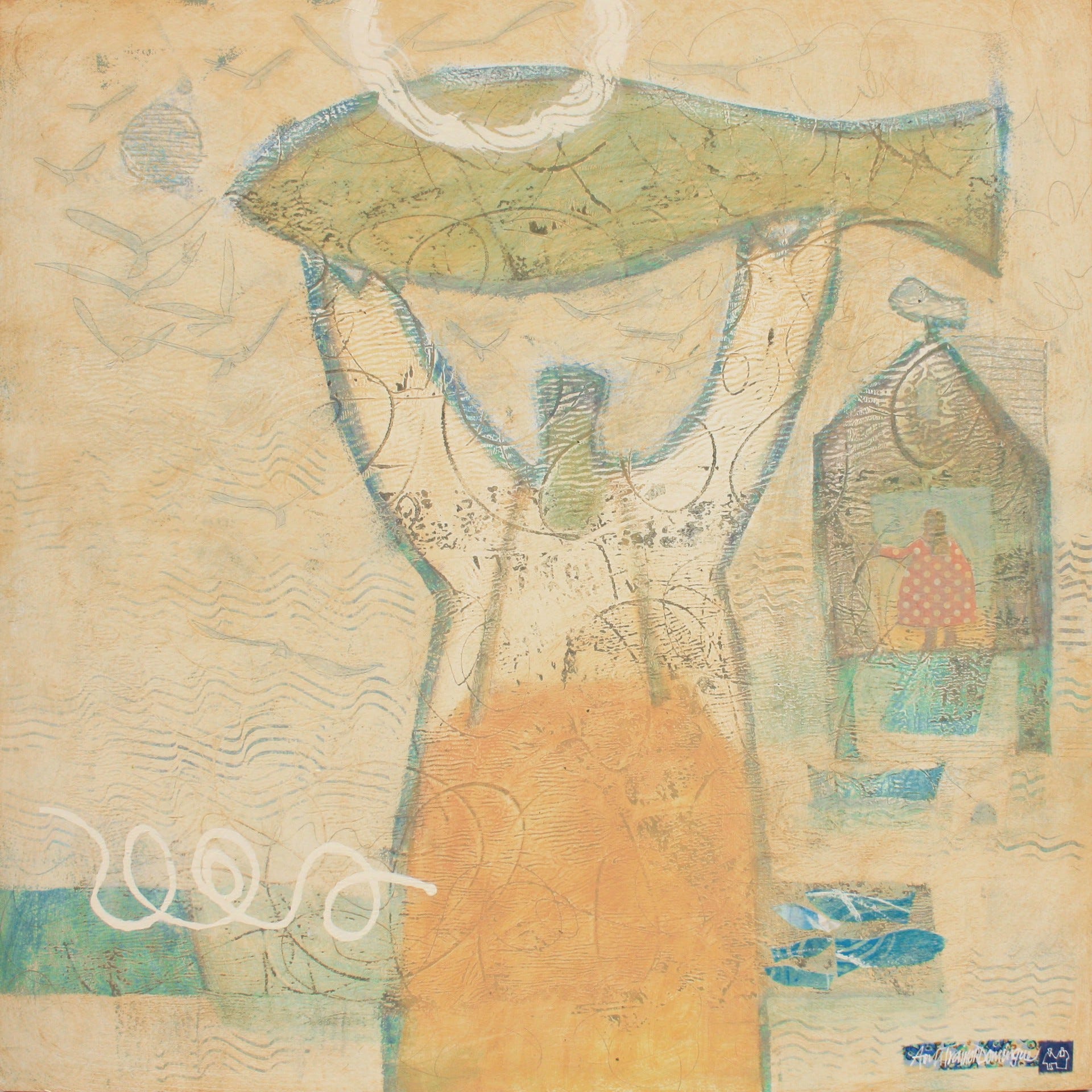
Ann begins by refusing to know too much. “At the beginning of my painting process, I am trying to keep a lot more open time,” she says on Radio Maine. She lets the early stages stay loose and playful, less intentional, and she is willing to lose an entire surface to find the painting hidden within it. With acrylic, she says, she will wipe the entire thing out and paint it over, or sand it back and start again.
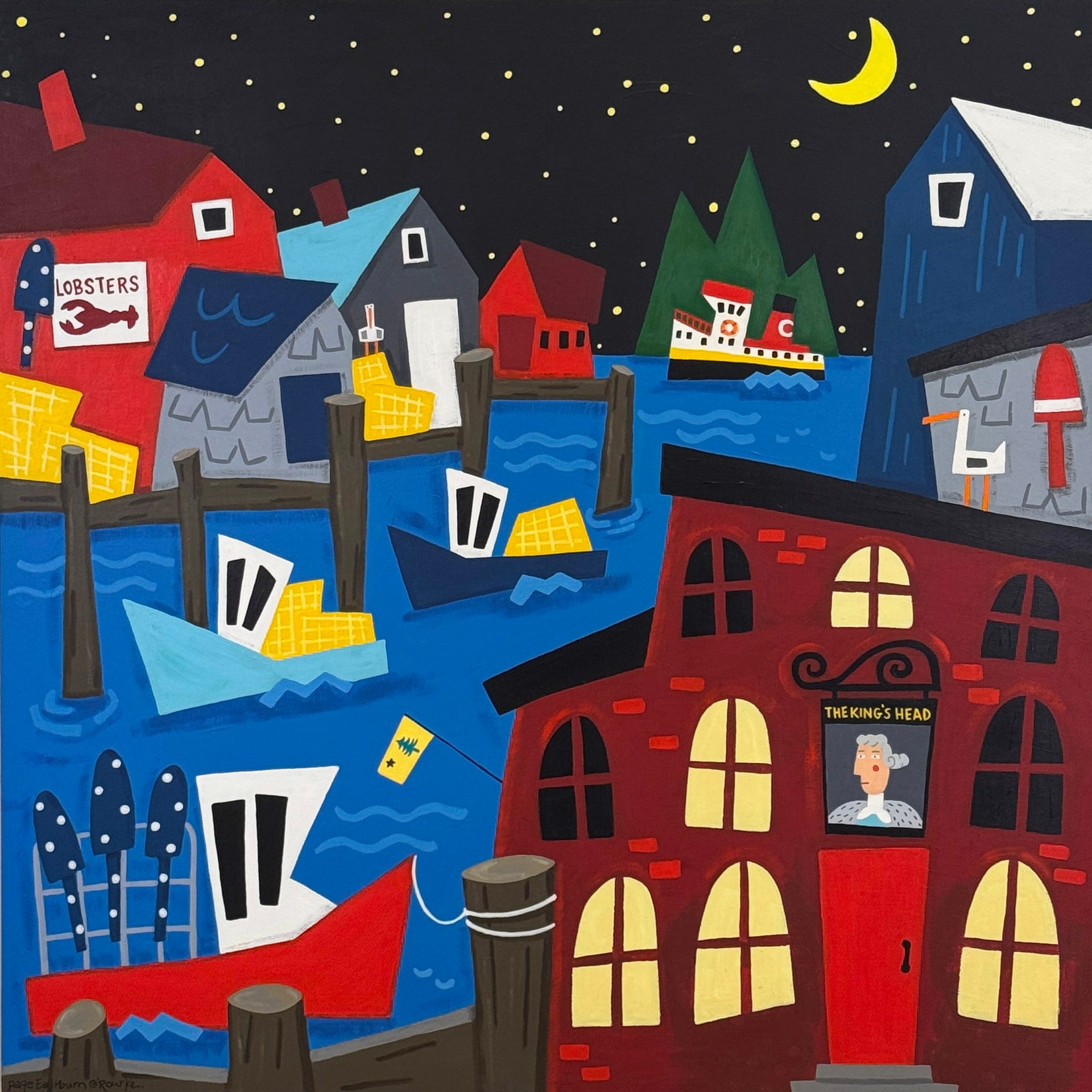
Page starts from a feeling. She will first sketch a place, take reference photos for color, and then leave it behind her. “When I get back to my studio, I’ll think about the way the place made me feel, and pick my palette from that,” she says. She thinks in color first. “I found I could say things with color and shapes that I couldn’t say in any other way.”
“I throw away a lot of paint. I trust the process more.”
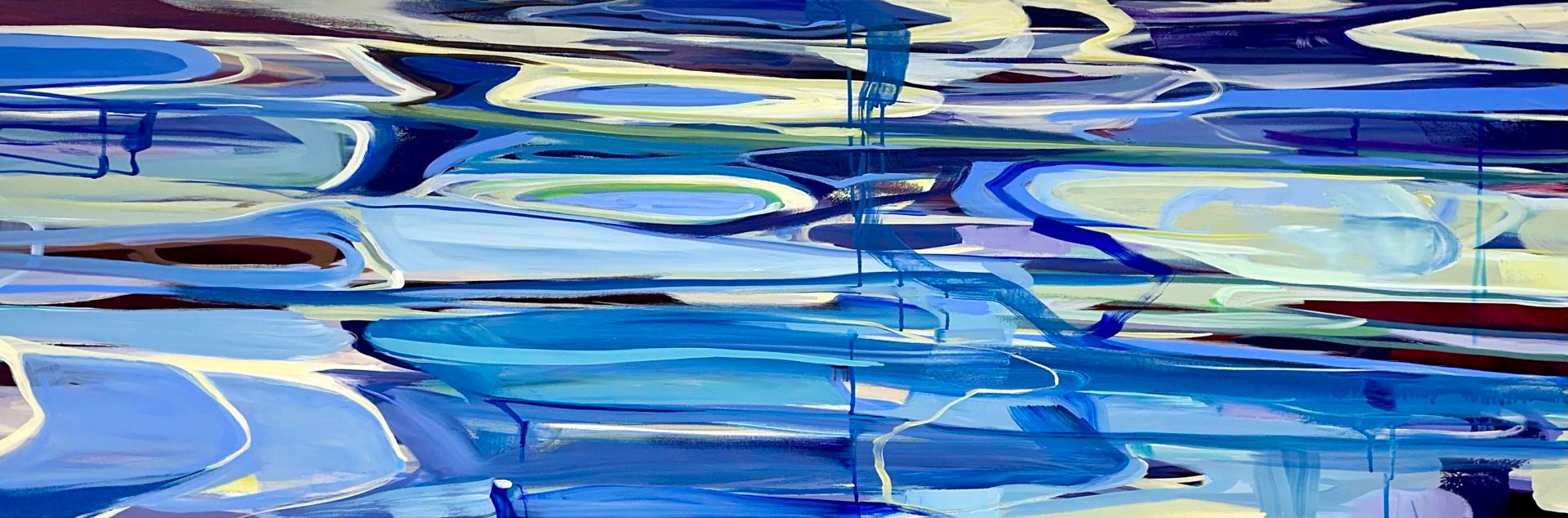
Liz says, “I’m much more of a process-based artist.” Her subject can be almost anything. What carries her is the doing itself: she mixes and reconsiders color, lays paint down, and scrapes it back. “I throw away a lot of paint,” she says, and she has made her peace with the waste. “I trust the process more.” Before Liz paints, she often writes, getting what is in her head onto the page so she arrives at the easel a little freer.
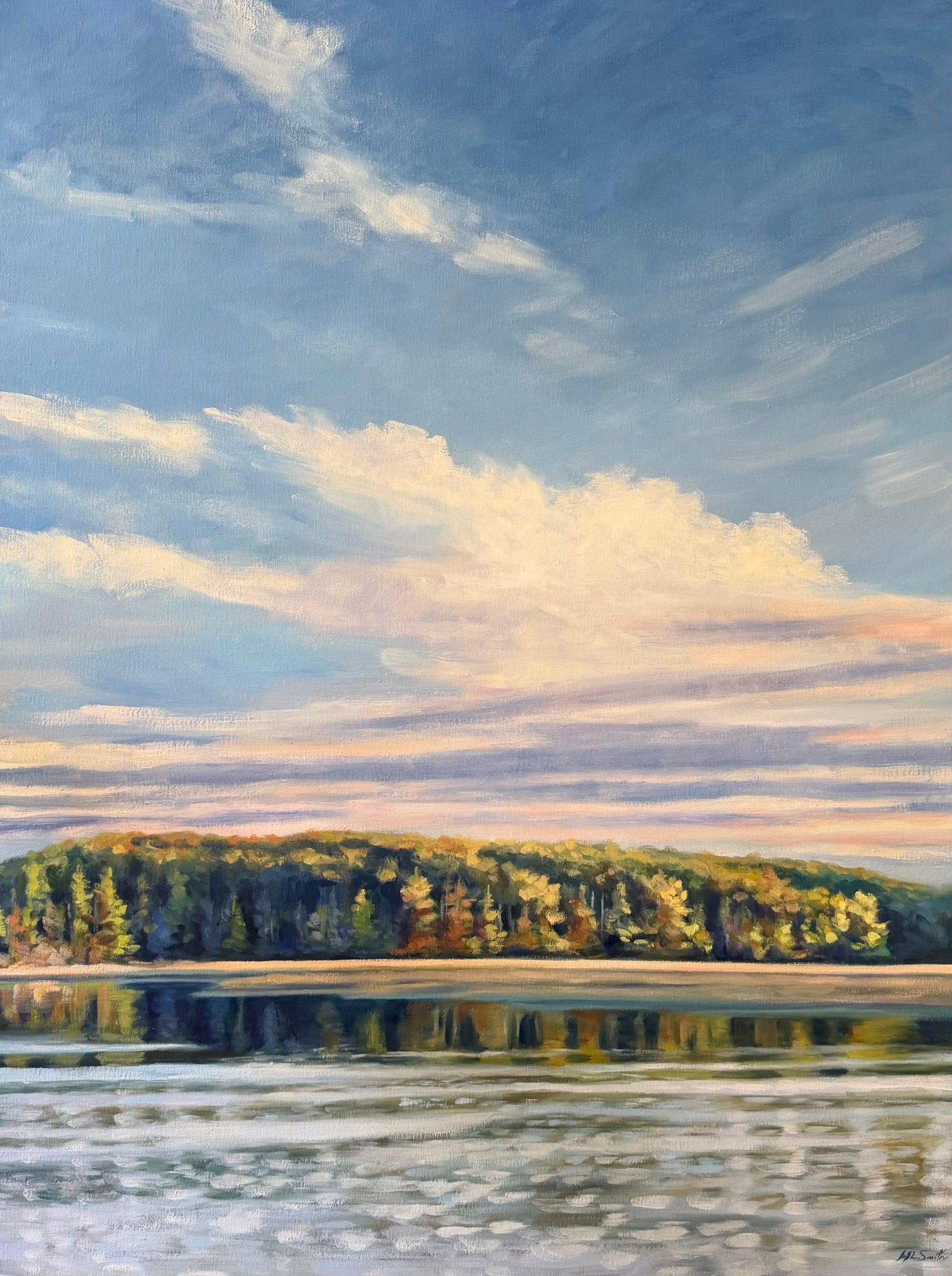
For Holly, the work is as much about taking away as putting on. She describes muting a middle ground, pulling the detail back so a viewer’s eye can travel into the scene, and resisting the urge to add one more careful stroke. “I have to stop,” she said of a painting she could have kept refining for hours. When she works outdoors, she starts by taking in the day before she touches the brush. “I try to gather in what energy is there, the day, the feeling, the mood, and then paint that.”
None of them begins by knowing how it ends.
A disciplined way of listening
This spring, I took my own work apart to see what I could find. For my doctoral dissertation a few years ago, I used a method called qualitative coding: reading a body of interviews closely enough to find patterns, marking each idea by hand, and identifying recurring themes. It is a disciplined way of extending the listening beyond the interview.
More recently, I applied that method to more than 600 conversations held over 15 years through Radio Maine and its predecessor, Love Maine Radio. This included episodes featuring artists like Ann, Page, Liz, and Holly. I had the help of software built on artificial intelligence, which did the mechanical sorting that would take a reader years to do by hand. That is the part I find exciting: a tool that can show us the patterns in our own days that are too large or too close to see.
It still took me a long time to do this work. I did it in batches, regularly cross-checking the findings, and going back several times to run through it again.
I learned a lot about the questions I ask and the people we’ve brought in to interview.
I also found some recurring themes, including one that needed further investigation.
In the first pass through, one pattern seemed to stand out: artists told me that age had made them better at their work. This didn’t seem as clear with other professionals.
Going back again, I found additional examples of this idea, including a former governor saying he was more proficient at the job at sixty than he would have been at forty, a line that had been in the transcripts all along. Across artists and non-artists alike, people who feel improved by age almost always mean wiser, not necessarily better at the task.
A repetitive process over time yields a different kind of knowledge for each person.
This type of examination is as important to my writing as to my interviewing. I’ve written hundreds of pieces for publication, both regionally and nationally. I’m now working on a memoir about medicine and my father. The discipline I was practicing on the transcripts is exactly what I need to do for this book. Asking once, reflecting, releasing what isn’t quite right, and asking again.
It is also, I have come to think, the discipline of medicine. A good clinician learns early not to fall in love with the first diagnosis. The patient in front of you is a person, not a pattern to be filed, and may be the very exception the tidy version would have missed. Reading my own archive turned out to be the same act of attention I have spent a career practicing in the exam room, only pointed at my own conclusions instead of someone else’s symptoms.
That is what I mean by process. It is the refusal to stop looking, whether I am reading a transcript or a patient. The new tools make that looking possible at a scale I could never have managed alone.
They do not do the looking for you.
Fire is a verb
This way of seeing is older than any dissertation, and it sits at the foundation of Chinese medicine. What Western readers often call the five elements is, more precisely, five phases. Wu Xing. The word at its center, Xing, means movement. It is a verb. Read the body through that lens, and an organ stops being a fixed part. It becomes something the body is always doing.
We are now in summer, the season of Fire. We cannot hold Fire. Fire is something happening, not something we keep; a release of heat and light that exists only while it remains in motion. It is a process.
We cannot hold Fire.
Life moves the same way. We never hold it finished. We are always somewhere inside it.
Why this may matter to you right now
Most of us live too close to our lives to see the patterns in them, and may not have the benefit of hundreds of recorded conversations and written pieces to look at in hindsight. This is why I created the “Shape of Your Days” companion app for subscribers, as well as the mini course, “The Life That’s Asking to Be Lived.” These provide space for reflection about where we are and what lessons we may take from our lives.
This summer’s reflective toolkit follows the same logic. It is a free field-guide for the Fire phase, the season of fullest bloom, a set of seasonal practices for noticing where your own warmth and light are running high this summer, and where they are running low. A process can run too hot or too cool. That, unlike a fixed thing, is something you can work with. The summer is the natural time to ask the question, while the light is long and the year is wide open.
Beginning where we are
Fort Williams will mean something different to our granddaughter than it did to my grandparents or my daughter. Our granddaughter is following the way of the artists. She is showing up in a place without knowing how the story will evolve, trusting the doing more than the plan.
A way of seeing is something we practice, and something we hand on.
Pause + Reflect: What is one place, or one part of your own life, you could look at again this summer as if you had never seen it?
This summer, may we show what we love to someone who is seeing it for the first time.
May we trust the Fire of being and of process.
✨ Thank you for walking this bountiful path with me.
Lisa
This week on The Bountiful Path
July at Portland Art Gallery: Ann Trainor Domingue, Holly L. Smith, Liz Prescott, and Page Eastburn O’Rourke. June 23 to July 27. Opening Reception Thursday, July 2, at the gallery, 5 to 7 PM. A first look at the four artists’ summer work, with light food and good company.
Featured on Radio Maine: Susan Newbold, on beginning again, and what starting art school at fifty changed.
Off the Wall: Entering the River of Color. Maine painter Jane Dahmen and her expansive works of resilience, intuition, and freedom.
From the Bountiful Path Archive: Catching the Wind: Wu Wei, Change, and Creative Flow, on creative flow as something we ride rather than force.
Bountiful Path Solo Reflection: The Practice of Staying
From Beyond the Path: Room to Write, on a Maine writer’s backyard studio and the small room that lets a long thought take its time.
The Bountiful Path: Offering seasonal practices for real connection, rooted in medicine, leadership, and art.
© 2026 Dr. Lisa Belisle. All rights reserved.