

White Space, Whole Light
On autumn openings: the art of proportion, and making room for what matters.

From overload to opening
When we cram every margin with feeds, meetings, and messages, the colors blur and connection thins. Autumn shows opening restores contrast; with white space, we can see the path ahead and one another more clearly.
Seeing the sky again
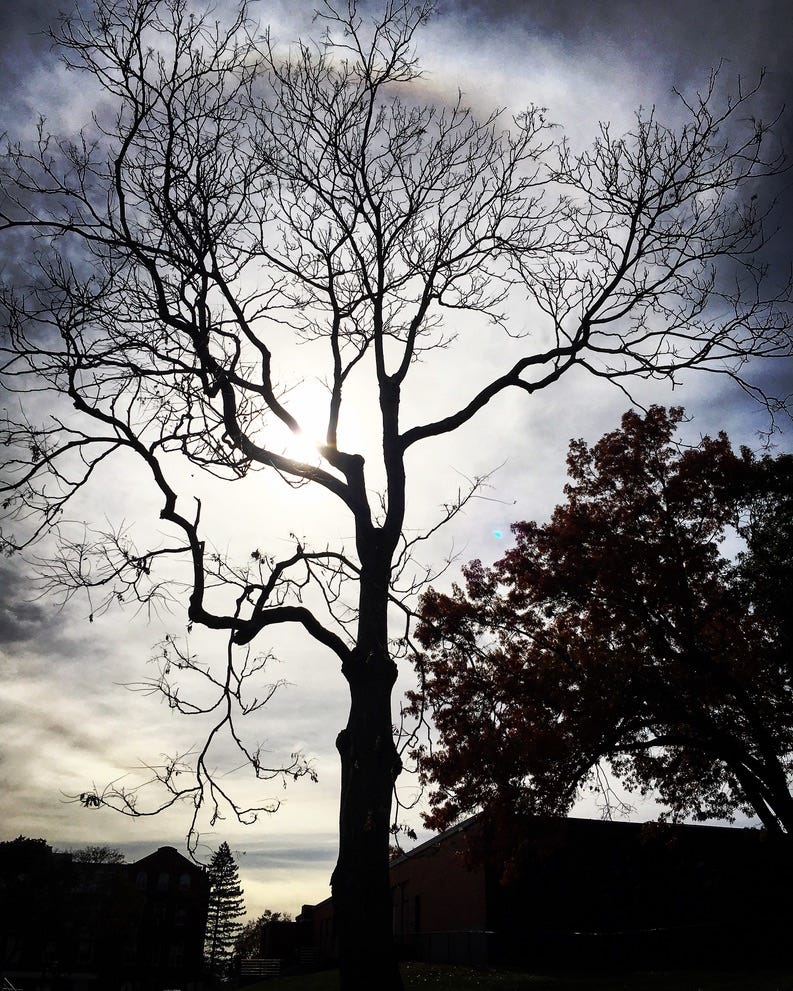
Out our Maine island windows, the leaves have opened room for the sky. Through increasingly bare branches, the gun-metal gray of Casco Bay expands its presence and the rising sun becomes molten silver upon the sea. Nature entertains us daily with the changes she brings as the seasons evolve. As things are subtracted, others emerge in the negative space.
Negative space, in art and design, is the intentionally empty area around and between subjects; it shapes what we notice and gives the eye a place to rest.
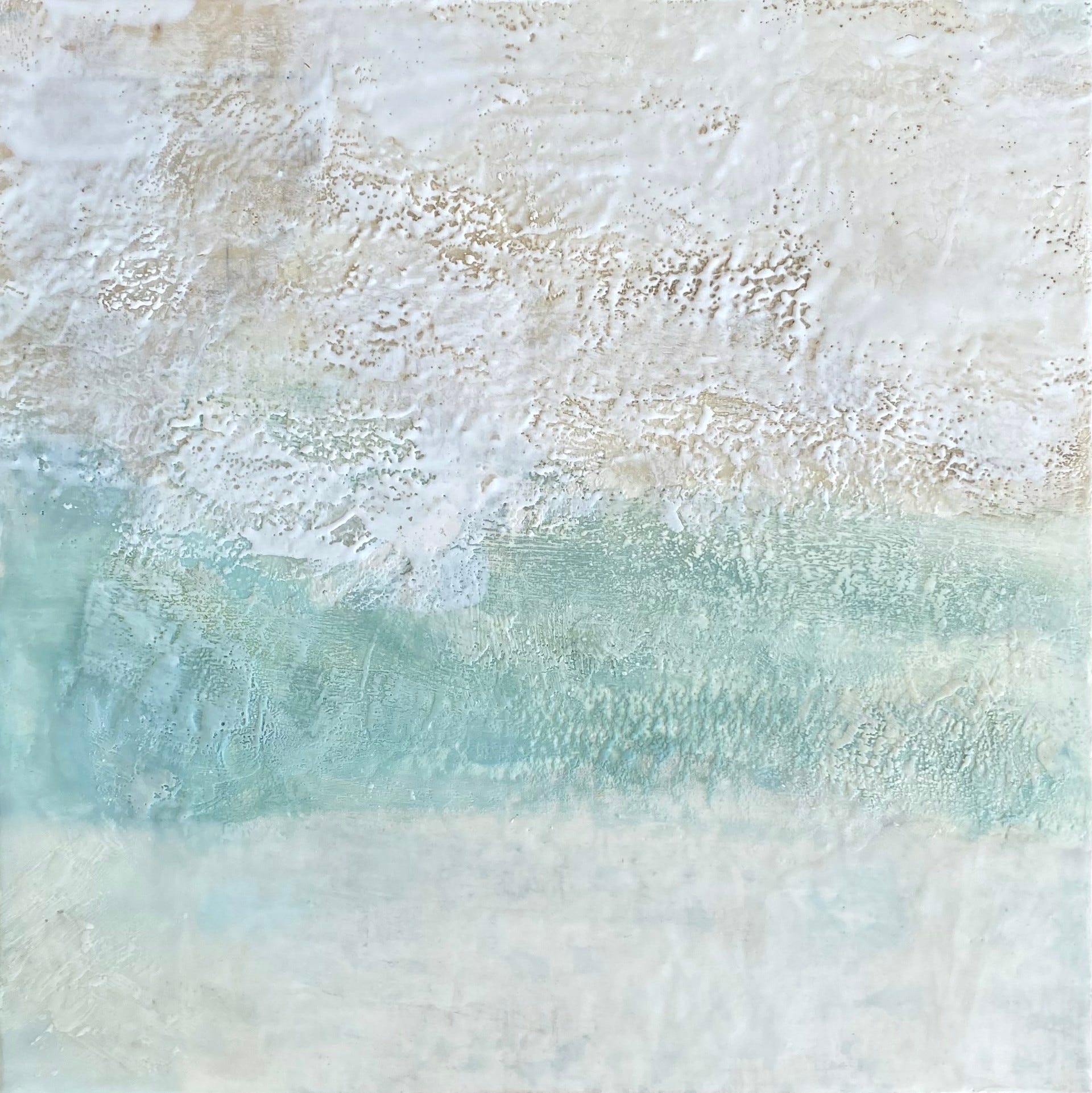
In Traditional Chinese Medicine, autumn is associated with the color white, which is often used as its own form of negative space. White can look different depending on where you stand. In some traditions it marks union; in others it marks mourning. The common thread is purification, a clearing of what is no longer relevant. Physics tells a related but seemingly paradoxical story: white light carries the colors red, orange, yellow, green, blue and violet, which only emerge when a prism is introduced.
When the branches empty, more of that white light reaches us, and the birds on those branches return to view. What seems like absence is often the space that lets things be seen.
“Release is not absence; it’s architecture.”
Proportion in care and leadership
Medicine teaches us the importance of intellectual and emotional space. Overwhelm a patient with facts, tests, and to-dos and we often get very little action. Offer too little context or time and we get the same result. Partnership lives in the middle, with the right amount in the right order and a little breathing room.
The same is true in leadership. A trellis that is too sparsely constructed gives the vine nowhere to hold; one that is overbuilt overshadows the life it should support. Strength comes both from what we place, and from the clarity between placements.
Relationally, space between people is not always distance; it is dignity. When we stop filling every silence, others step forward. When we edit our help, shifting from Rescuer to Coach in the Empowerment Dynamic, we make room for someone else’s capability and collaboration.
Listening as white space (with Dr. Chuck Radis)
On Radio Maine, I recently spoke with Dr. Chuck Radis about his new book, Mystery in the Room: A Physician’s Journey Treating Patients with Rare Diseases. His cases turn on listening that leaves room for the story to shape the diagnosis.
We also explored how technology, including AI, can serve by subtraction: fewer clicks, cleaner notes, more eyes-up time. Life on Peaks Island keeps his priorities ordered. Island weather and finite resources edit the calendar.
Release what is extra, and what matters holds.
Proportion you can feel: palette and room
Mix every color and you get mud. Choose a few and the eye rests. Last week at Radio Maine Live, the balance felt energizing and connective: the right number and mix of voices, enough contrast to keep the signal clear, enough space for connection to form. The lenses we bring shape the palette we notice.
That same principle shows up in how we interpret the symbols represented by color. We often see only what our habits allow. Paradigm blindness is what happens when a familiar frame makes other meanings invisible. For many of us, the color “white” defaults to Western weddings, union, and purity. If that is our only lens, we can miss other readings.
A brief anchor: Taoism (Daoism) is a Chinese philosophical and religious tradition oriented toward living in harmony with the Dao, “the Way.” It emphasizes naturalness, simplicity, and non-forcing action (wu wei). In the yin–yang symbol, white marks yang qualities: brightness, clarity, activity.
In the Five Phases tradition that interweaves with Taoist and medical thought, white belongs to Metal and autumn, the season of pruning and release. In Chinese ritual culture, white also appears in mourning.
When we hold more than one frame, the season’s “white” stops being a single answer and becomes a doorway to nuance.
Three small moves for more white space
Name the center. Naming clarifies choice, so that everything else can be measured against it. One line is enough: “The purpose of this meeting is…” or “The feeling this painting should carry is…” When the center is known, excess shows itself.
Limit the palette. Two key metrics for the month. Three colors for the series. One question for the check-in. Constraints do not confine; they kindle. Fewer choices, more momentum.
Install a pause you already have. First sip of coffee. Hand on the doorknob. The moment before you open your charting window or your design file. Let that everyday threshold be a cue to release one thing before you add one more.
Why this may matter for you
If your days feel like mixed paint turned gray, you may be painfully oversaturated. Autumn offers a compassionate correction: reduction as renewal. Releasing one thing at a time restores color separation, which restores energy. Because you reclaim attention, connection to self, others, and work has space to land.

Pause + Reflect: What one element—task, tone, tab, or talking point—will you release this week to let more light through?
Standing at the window again, we see that the branches are not barren; they are articulate. The white behind them is not empty; it is generous. Union and letting-go, purity and possibility: two sides of the same season.
When we release what no longer belongs, what does belong emerges in full color. Walk your bountiful path a little lighter, and see what appears.
✨ Thank you for reading, and for walking this Bountiful Path with me.
Warmly,
Lisa